Commercial Waste Removal in Ealing
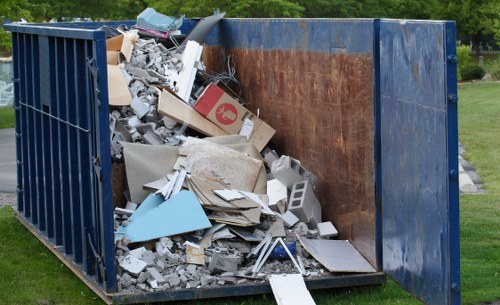
Commercial waste removal in Ealing needs to be straightforward, lawful and suited to the way local businesses actually work. We handle the collection of mixed business waste, bulky items and recurring commercial clearances, with a focus on keeping workplaces clear without creating avoidable disruption. Whether you are planning a one-off uplift or arranging a regular route, the service is designed to deal with everyday operational waste sensibly and professionally.
The main aim is simple: remove waste from business premises, sort it carefully and move it on in a responsible way. That can include office furniture, retail packaging, stockroom clutter, broken fixtures and other non-hazardous material that no longer serves your operation. If you need a broader view of our business waste removal service, that page sets out the type of work it covers in more detail.
For a clear starting point, tell us what needs removing, where it is located and how much access is available on the day. That is usually enough for a useful quotation discussion. If you already know the items are bulky, awkward or mixed, mention that as well so the collection can be planned around the right loading approach and disposal route. Clear information saves time, especially for sites with loading bays, shared entrances or limited internal access.
Office and workplace clearances
Offices often generate waste in a different pattern from domestic properties, so the removal method needs to fit desks, chairs, screens, storage units and general fit-out material. A commercial collection can be arranged for single rooms, whole floors or phased clearances, depending on whether the space is being reconfigured, vacated or simply decluttered. We can also deal with items that are no longer suitable for reuse within the office because they are damaged, worn or beyond economical repair.
When a workplace is being cleared, it helps to separate items that are staying from items that are leaving. That reduces handling time and makes it easier to protect fixtures, access routes and shared areas. If there are confidential papers mixed into the waste, they need a different treatment pathway from ordinary rubbish; our confidential shredding page covers that service area. For customers comparing options, the service can be planned alongside office clearance when furniture and general contents need removing together.
Typical commercial office waste may include:
- desks, pedestal drawers and office chairs
- filing units, shelving and reception furniture
- packed archive material and mixed bagged rubbish
- small electrical items and redundant peripherals
- partitioning components, shelving and loose fit-out debris
Retail, stockroom and furniture disposal

Retail premises and stockrooms produce waste that can build up quickly when displays change, stock is rotated or fittings are replaced. Commercial waste removal can cover damaged shelving, old promotional displays, packaging, cartons and redundant shop-floor furniture, along with the smaller clutter that collects behind the scenes. The work is best approached in a practical order so usable access remains open while items are taken away.
Furniture often forms a large part of a business clearance because it is bulky, awkward to carry and inconvenient to store once it has reached the end of its life. We can remove items such as reception seating, counters, storage cupboards and loose furniture that has been replaced. If the waste is mainly furniture rather than a general mixed load, the related furniture disposal page is a useful place to see the narrower service scope. Where the need is broader, furniture clearance can be a better fit for mixed collections.
It is usually better to group similar items together before removal, particularly if the premises contain a mix of saleable stock, reusable equipment and waste that must be taken away. That distinction helps avoid confusion and keeps the collection focused on the material that genuinely needs disposal. When the job involves a room that is still trading, we can work around occupied spaces and leave the remainder of the site in a usable condition.
Bulky items, appliances and specialist loads
Some business waste is not just bulky but also awkward to handle safely. That is often the case with broken appliances, heavy cabinets, worn mattresses in hospitality settings or surplus fixtures from a refurbishment. These items need careful movement, suitable lifting and the right sorting once they are loaded. Commercial waste removal can be arranged to clear those larger pieces without treating them as ordinary bagged rubbish.
For appliance-related work, the material and condition of the item matter because not every object is handled in the same way. Fridges, freezers and similar units may require separate processing because of their construction and contents. Our fridge and appliance removal page is useful if that is the main category, while mattress and sofa disposal applies where upholstered or bedding items are the main focus. The broader clearance service remains appropriate when these objects are just one part of a mixed commercial load.
Before collection, it helps to identify any items that are especially heavy, awkward or fixed in place. That lets the removal team plan the order of work and decide whether additional labour or dismantling is likely to be needed. We do not need a perfect inventory to begin, but a sensible summary makes the quotation more useful and helps avoid surprises when the waste is physically assessed on site.
Construction, refurbishment and trade waste

Building and refurbishment waste is a common reason businesses need a fast clear-out service. Offices being remodelled, shops being refitted and commercial units undergoing maintenance can all produce mixed debris, packaging, broken fittings and surplus materials. Commercial waste removal in this context is about keeping the project moving by taking away the refuse that would otherwise occupy work areas or block access routes.
The right approach depends on the material mix. Trade waste can include timber offcuts, metal pieces, plasterboard, packaging, carpet sections and dismantled fixtures, but it should still be separated from any material that needs specialist disposal. If the job is tied to a renovation or contractor activity, the builders waste clearance page sets out that type of work more precisely. For broader disposal questions, the waste removal page is a useful overview of the service family.
Where a site is active, practical planning matters as much as the load itself. Collections can be timed to fit deliveries, contractor access and opening hours so waste leaves before it becomes a hazard. Keeping a clear route to the loading point is often the simplest way to reduce delay, especially when the premises include narrow corridors, shared stairways or operating back-of-house areas. A good commercial collection should support the work already happening on site rather than interrupt it.
Pricing factors and quotation details
Commercial waste removal is usually priced around the nature of the load, the amount of labour involved and any disposal complexity created by the items themselves. A quote may need to reflect volume, weight, access, whether the material is mixed, and whether dismantling or carrying from upper floors is required. These are ordinary factors in waste work, and they matter because a clean, direct load is different from one that has to be separated, moved through shared areas or lifted carefully by hand.
It is also useful to mention whether the items are already gathered, whether parking or loading access is straightforward, and whether the collection must happen at a particular time. That information does not need to be elaborate; a few plain facts are usually enough to shape the discussion. If you are comparing service pages, the pricing and quotes page may help you understand how enquiries are approached, while book online offers a direct route if you are ready to set things in motion.
For best results, try to describe the waste in practical terms rather than broad labels alone. For example, saying “two desks, six chairs and a stack of packaging†is more helpful than simply saying “office wasteâ€. Precision improves the estimate and makes it easier to choose the right collection size and crew. If there are mixed streams on the same site, it is better to mention that early rather than after the work has started.
About Ealing
Ealing is a large district in west London, now part of the London Borough of Ealing, with a long history that reaches back to the early settlement around what became Ealing Green. The area grew from a rural parish into a suburban centre during the nineteenth century, especially after the arrival of rail links made travel into central London more practical. That shift left a varied street pattern behind, with older historic cores near the village-like heart and later residential and commercial growth spreading outward along the main roads and railway corridors. Among its best-known landmarks is Pitzhanger Manor, designed by Sir John Soane and completed in the early nineteenth century as a country retreat before the district changed around it. The manor now stands as a significant architectural reminder of the area’s Georgian and Regency past. Ealing Broadway remains one of the busiest focal points, combining shopping, transport and civic activity, while the surrounding roads contain a mix of Victorian terraces, interwar buildings and later developments. The district also has a strong association with film and broadcasting: Ealing Studios, established in 1902, became famous for a distinctive body of British film production and remains a notable cultural reference point. Green space is an important part of the local character too, with Walpole Park offering ornamental grounds, open lawns and a setting for seasonal events, while smaller pockets of green help soften the urban landscape. The Grand Union Canal passes nearby through the wider borough, linking the area to London’s historic waterway network and to the industrial and transport history that shaped west London in earlier centuries. Together, these elements give Ealing a layered identity: suburban, civic, cultural and well connected, with a built environment that reflects several periods of London’s growth.
Household-sized clearances for mixed business premises
Not every business premises contains purely commercial equipment. Small offices, studios, clinics and managed properties often accumulate domestic-style items as well, including soft seating, kitchen furniture, storage boxes and occasional household contents used by staff. Commercial waste removal can still be the right route when the job is centred on a business site, even if some of the material resembles household clearance rather than standard office refuse. The key is that the collection matches the premises and the practical job to be done.
Where the content is more mixed, broader clearance services can help separate the right category of waste from the wrong one. For example, if a unit contains an unusual amount of furniture or leftover contents from a former tenant, home clearance or house clearance may be relevant for domestic-style items, while flat clearance may suit compact properties with limited access. Those pages are not substitutes for a commercial collection, but they do show how the wider clearance offer is structured when premises contain more than one sort of item.
Some customers prefer to tackle a job in stages, beginning with the largest items and then clearing the smaller pieces once space has opened up. That can be sensible when the premises are tight or when the contents are still being sorted. We can work with that approach so long as the intended load is described clearly. The useful thing is not a dramatic explanation, but a workable outline of what stays, what goes and what needs extra care.
Garages, stores and back-of-house areas
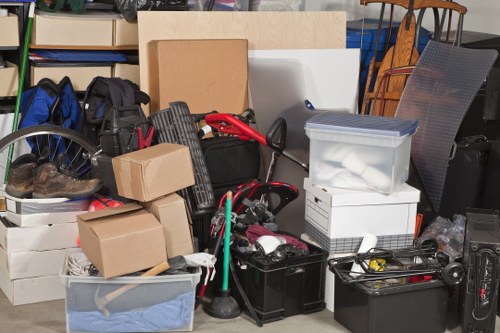
Commercial premises often hide waste in places that are not designed for day-to-day use: service cupboards, storage rooms, garages and back-of-house spaces. These areas collect redundant stock, broken tools, obsolete displays and old furniture because they are convenient places to defer decisions. A careful waste removal service can open up those spaces again without forcing you to reorganise the whole site at once.
If the site has a garage-like storage area, the relevant garage clearance service may be helpful where the contents are mainly loose, mixed or accumulated over time. For gardens attached to business premises or managed outdoor spaces, garden clearance may be a better fit when the material is green waste, soil, branches or outdoor detritus. These pages show how different kinds of clearance can be separated when the site contains several waste types.
The most effective way to approach hidden storage waste is to decide what counts as essential equipment and what counts as dead stock. That distinction avoids accidental removal of useful items and reduces the chance of later confusion. If the area contains objects that are fragile, dusty or long untouched, mention that in the enquiry so handling can be planned with the right level of care. Good sorting is not about perfection; it is about making the collection safe and practical.
Recycling, disposal routes and responsible handling
Commercial waste removal is not only about lifting items away; it is also about sending them on through the correct disposal route. Different materials may be suitable for recycling, transfer, recovery or standard disposal, depending on what they are made from and how they have been used. That means mixed waste should be handled with some attention to composition, so reusable or recyclable material does not needlessly end up in the wrong stream.
Where sustainability matters to your organisation, it is sensible to ask how the load will be treated once collected. The practical answer will depend on the waste itself, but the broader approach should be consistent with responsible handling and lawful disposal. If you want more detail about that side of the service, our recycling and sustainability page explains the general principles. For items that may need special treatment, such as certain controlled materials, the hazardous waste disposal page is the relevant place to look rather than assuming ordinary collection is enough.
When you are ready to request a quotation, keep the message short and practical: what needs removing, where it is, and whether there are access issues or deadlines. That is enough to begin a sensible conversation. If the load is mixed, simply list the main categories. If the collection is urgent, say so plainly. Contact us to request a quotation for commercial waste removal in Ealing.